
Nobody in between: why I built my own stats app
Diesen Artikel auf Deutsch lesen →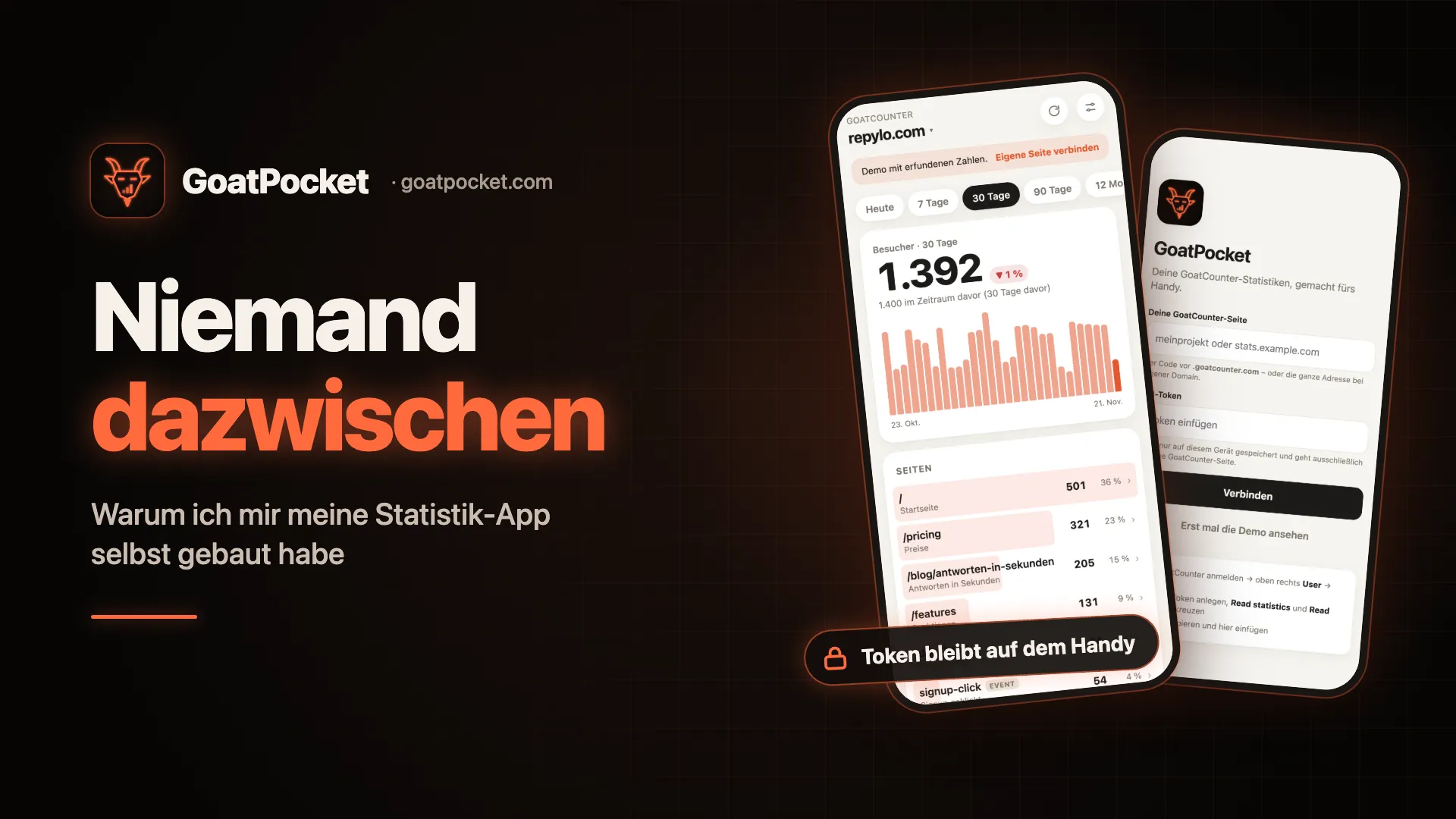
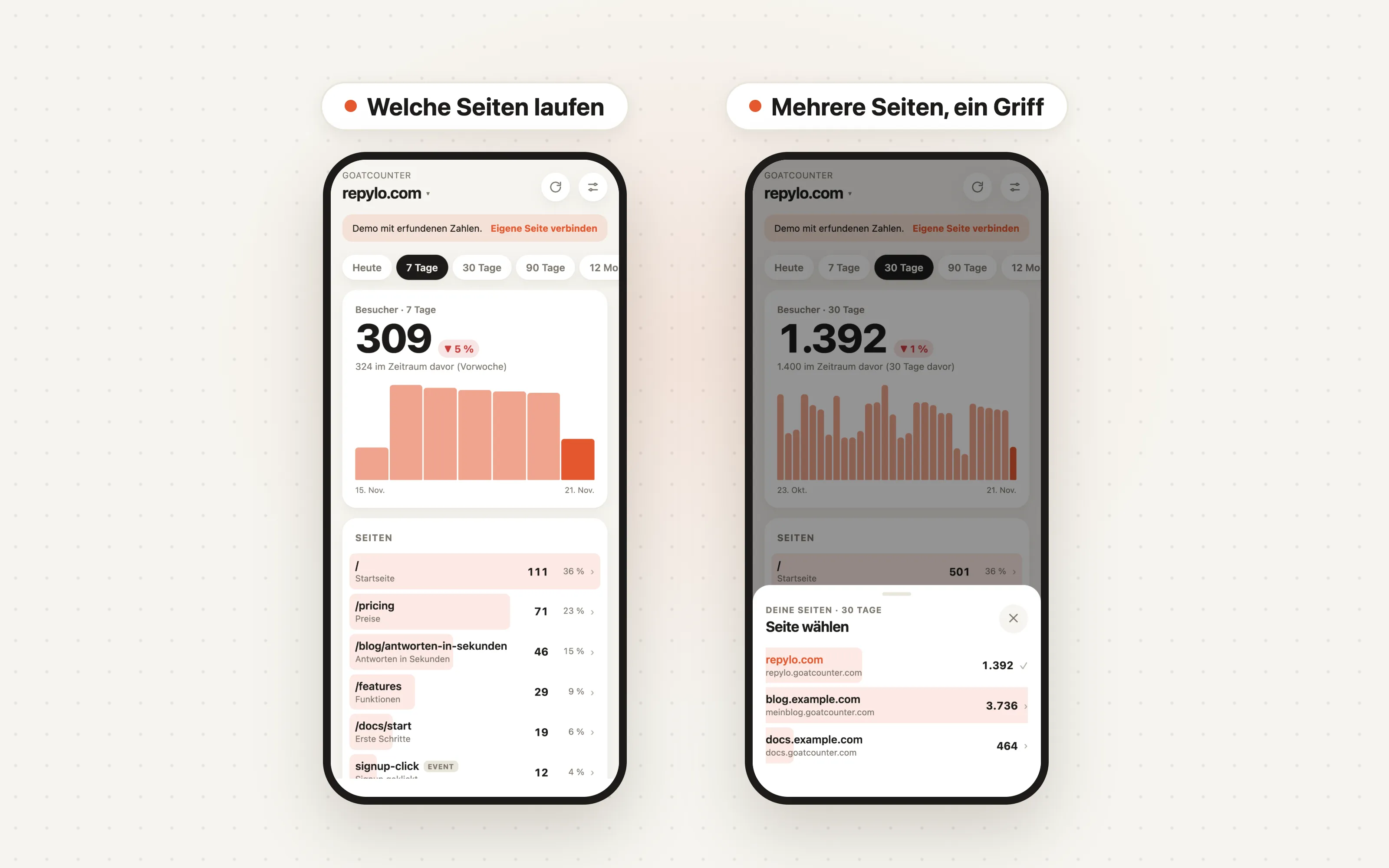
How many people are playing Thermikdoku right now? The answer is in GoatCounter. But its interface is so awkward on a phone that I opened my laptop every single time.
GoatCounter counts visits without tracking people. That’s why I use it for my projects. What was missing was a view for my phone. So I built one in a single evening: GoatPocket.
Privacy as a blueprint, not a promise
In the past, I would have looked for a finished app and handed my API key to some third-party service. For a tool I picked precisely because of privacy.
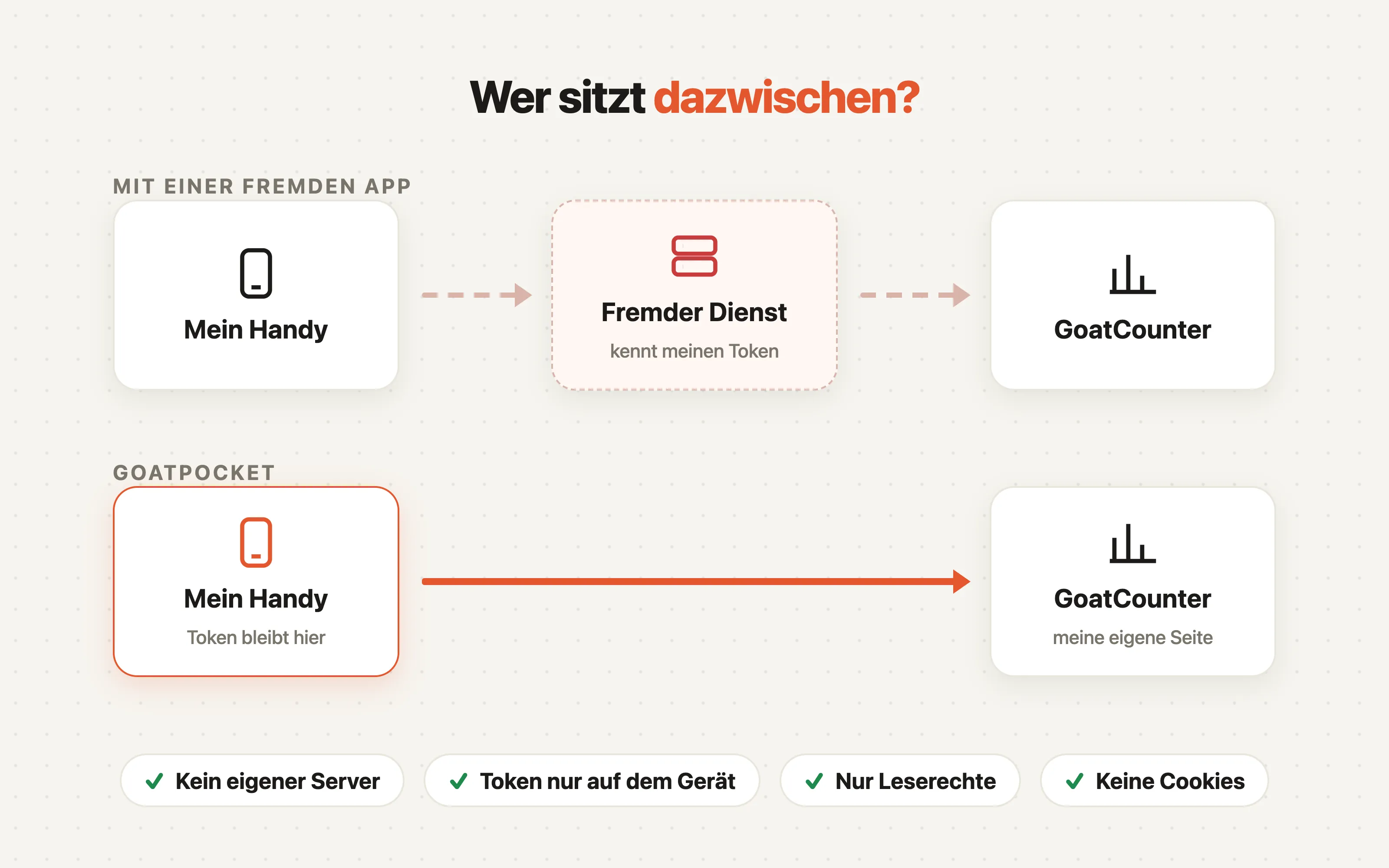
Today I build things like this myself with Claude Code. That changes the question. It’s no longer “Which vendor do I trust?” but “Who needs to be involved at all?” For GoatPocket the answer is: nobody except me and GoatCounter.
- No server of its own: It’s a plain static site. No data is stored anywhere.
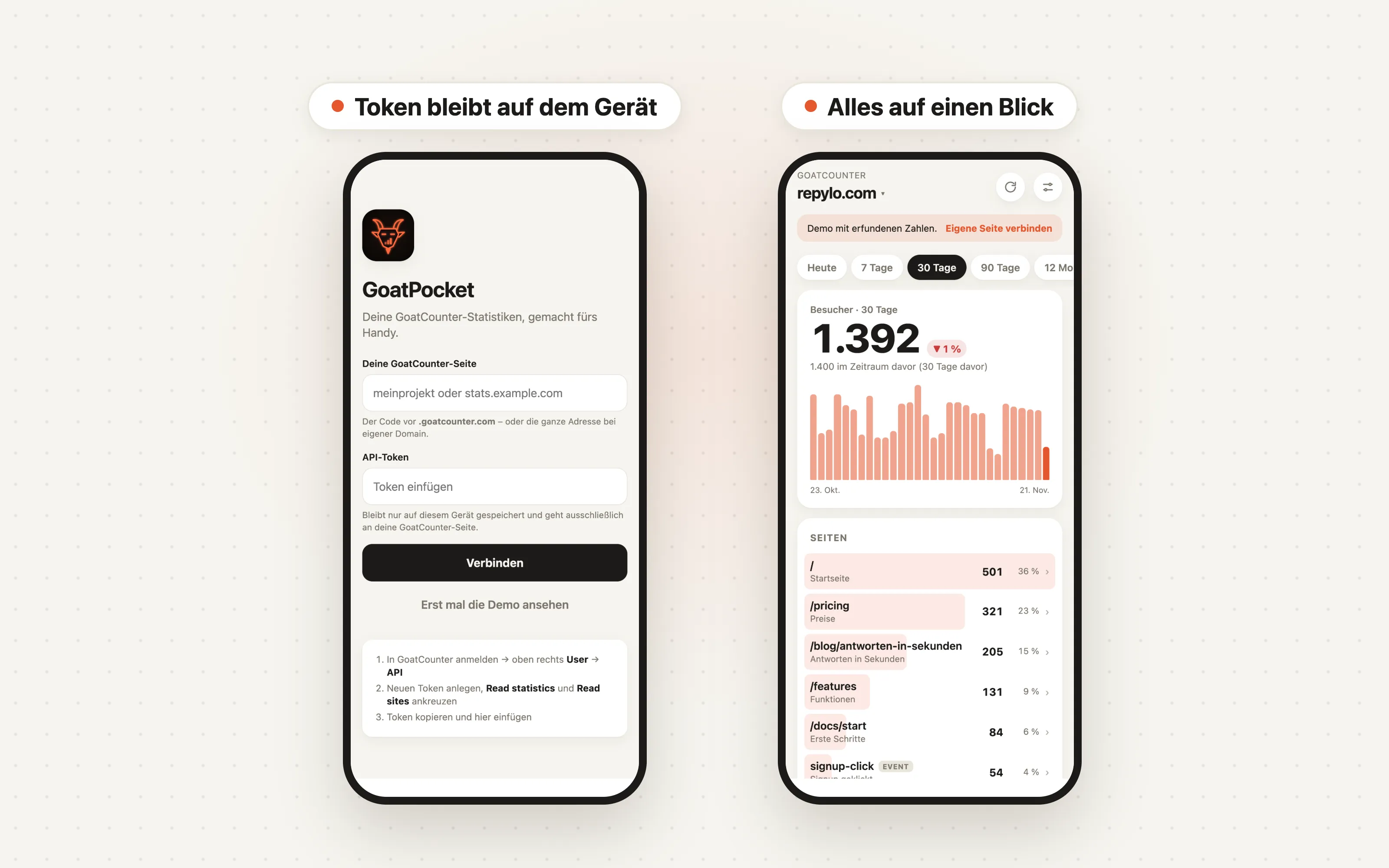
- The token stays on the device and only goes to your own GoatCounter site.
- Read-only access: The token can read statistics and nothing else.
Where experience still counts
In production, the first version suddenly returned errors instead of numbers. GoatCounter allows four requests per second, and before every call the browser sends a preflight request that counts too. Now the app throttles itself and caches responses. Limits like these aren’t in any prompt. You only find them in production.
What I take away from this
Privacy is often seen as giving something up. When a tool of your own costs just one evening, that’s no longer true. The most privacy-friendly solution is often the one with nobody in between.
You can try GoatPocket at goatpocket.com, even without an account of your own, using demo numbers.
What small tool would you build so your data no longer runs through someone else’s servers?
Screenshots: demo with made-up numbers.